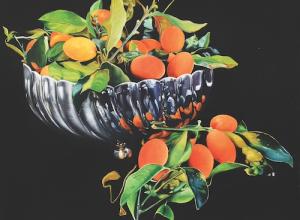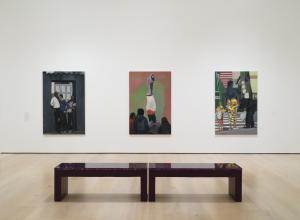


This summer, Meyer Gallery presents four solo exhibitions by Eric G. Thompson, Milt Kobayashi, William C. Hook, and Francis Livingston. Each show highlights a painter whose work is grounded in technical command, formal clarity, and a sustained engagement with their subject. Opening receptions for each exhibition will be held on the first day of the show from 4 to 6 PM at the gallery.
Art News

When thinking of great art, we can’t discount the importance that collectors, philanthropists, and banking families played in the art market from the Renaissance onwards.
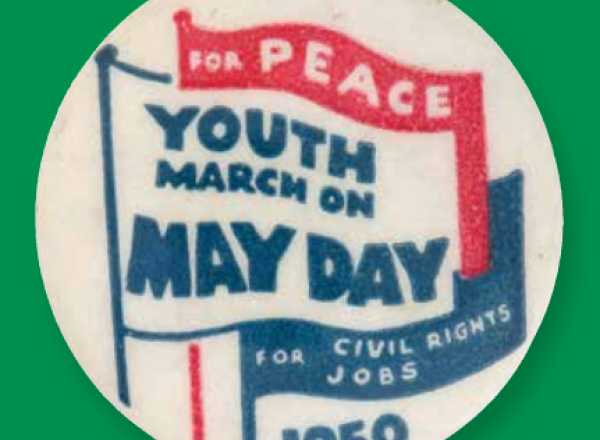
Since our very first president, Americans have adorned themselves with political messages. A compact way to tell the world about your political views and preferred candidates, buttons and pins have long served as simple, easy ways to boldly show your support.

Emerging artist Wenhui Hao (2000) has been drawing attention with her striking blend of figuration and abstraction. The 2024 Royal College of Art graduate now lives and works in Beijing and London and has had a number of popular exhibitions across Europe and Asia. Her first U.S. solo exhibition opened June 11th at Half Gallery in NYC.

In Rome, after nearly two decades in the making, a new piazza in front of the ancient tomb of the Roman Emperor Augustus is finally open– at least partially.

In the vacant 42,000-square-foot space of an office building in the Lower East Side of New York, a new type of hybrid museum will open in 2026. This nonprofit institution, Canyon, will be a cultural venue centered around video, performance, sound, and immersive art.

Copying within the context of the art world has evolved over the centuries. What was once understood as a vital tool for study and learning is now often perceived, especially by laymen, as a kind of cheating. Even so, copying sometimes is ethically questionable.

“Blacksmith, I set ye a task. Take these harpoons and lances. Melt them down. Forge me new weapons that will strike deep and hold fast.” - Captain Ahab, Moby Dick by Herman Melville, 1851
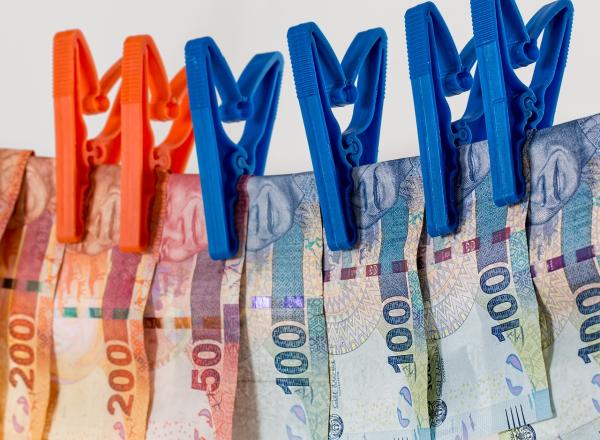
Art has long been identified, even romanticized, as an ideal way to launder money. There’s a thread of logic here: the art world accommodates anonymous, high-dollar buyers and the industry allows large cash deals. For racketeers, it’s difficult to conjure up a more attractive set of circumstances.

Just last year, a seemingly ordinary oil painting, attributed to a “follower of Julius Caesar Ibbetson,” an 18th-century British painter, sold for £400 ($506) at Dreweatts auction house in London. The buyer initially believed the piece to be that of Philippe Jacques de Loutherbourg’s, a French refugee and painter living in London. However, when the painting was sent out for cleaning, it was returned to its new owners with J. M. W.