



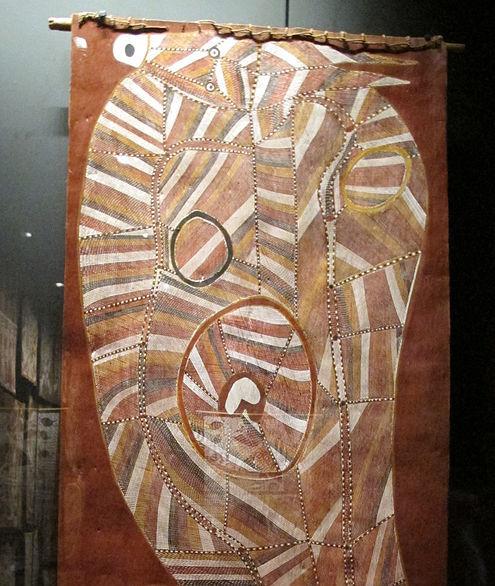
Tied to important oral traditions, Aboriginal art is deeply intertwined with spirituality and culture. Most contemporary Aboriginal art is informed by ancient stories and symbols of Jukurrpa (translated as Dreaming or Dreamtime). The foundation of many Aboriginal beliefs and culture, Dreamtime refers to the creation period, a time when ancestral beings traveled the desert, leaving behind landforms, people, and culture. Dreamtime is additionally often thought of as a continuum of the past, present, and future, existing outside of temporal reality, that can be accessed through personal experiences which are then recorded through art.
Widely considered the most influential Aboriginal artist, Albert Namatjira (1902–1959) was the first to receive widespread recognition. Integral in developing the Hermannsburg School watercolor technique, Namatjira’s vibrant and otherworldly Australian landscapes were criticized by some as assimilationists, but are now recognized as skillful synergies of Western painting techniques and coded Aboriginal observations of spiritual connection with the land.







![DEl Kathryn Barton [Australian b. 1972] the more than human love , 2025 Acrylic on French linen 78 3/4 x 137 3/4 inches 200 x 350 cm Framed dimensions: 79 7/8 x 139 inches 203 x 353 cm](/sites/default/files/styles/image_5_column/public/ab15211bartonthe-more-human-lovelg.jpg?itok=wW_Qrve3)


