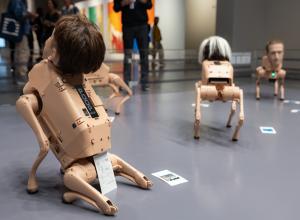


Alternative Perspective by artist Anton Bakker is the world’s first-ever art exhibition featuring virtual, augmented, and mixed reality interactions, showcasing art sculptures designed from mathematical principles that explore the frontiers of perspective and perception.
August 2020 Art News

The New-York Historical Society presents Hope Wanted: New York City Under Quarantine, a special free outdoor exhibition documenting the experiences of New Yorkers across the five boroughs during the height of the COVID-19 pandemic.

Mary Cassatt’s painting Two Little Sisters sold on Friday, August 7 for $519,000, making it the highest value lot at an online sale of American art at Christie’s in the five years they’ve held online sales in the category.

"Norman Rockwell: Imagining Freedom" explores themes and events in American history that still resonate today. On view at the Denver Art Museum through September 7. Watch this video sneak peek and learn more and buy your general admission ticket in advance at their website.

Sime creates large-scale modular artworks from discarded technological material such as electrical wires, circuit boards, motherboards and computer keys.

Unparalleled outside of Spain, the collections of the New York–based Hispanic Society Museum & Library focus on the art and culture of Spain, Portugal, Latin America, and the Philippines, from antiquity up until the early 20th century.

David Allen Sibley has been called the most important illustrator of birds since John James Audubon or Roger Torey Petersen, and his "Sibley Guides to Birds" have sold more than two million copies. Rita Braver finds out how the bird fancier became one of the most respected and successful chroniclers of avian life.
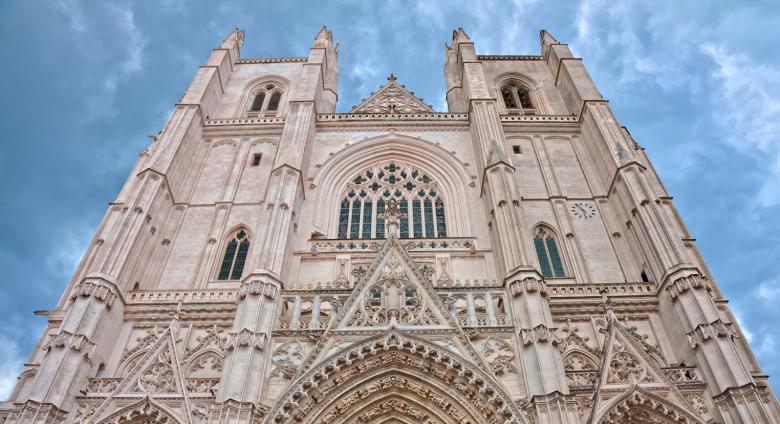
In the early hours of July 18, a fire at the iconic Cathedral of St. Peter and St. Paul of Nantes shocked France.

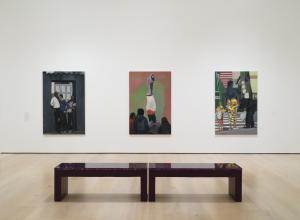
A new exhibition at the Toledo Museum of Art examines the work of contemporary African American artists who use a mixture of text and images to tackle cultural stereotypes and challenge oppressive racial characterizations.

In the long months of the COVID-19 lockdown, many citizens have found their cities emptied of human presence and transformed into places of eerie unfamiliarity. Conversely, this experience has allowed many of us to freshly appreciate the architectural achievements that our cities are made of. Meanwhile, the protests following the Black Lives Matter movement and the boarding up of entire neighborhoods brought to the fore questions of ownership and inequity, and the way architectural monuments work as markers of capital.